
Employee Health Insurance Explained: Benefits Every Worker Should Know sets the stage for this comprehensive exploration, offering readers valuable insights into a crucial aspect of workplace benefits.
The following paragraphs will delve into the specifics of employee health insurance, shedding light on its importance and various aspects that every worker should be aware of.
Introduction to Employee Health Insurance
Employee health insurance is a type of coverage provided by employers to their employees, offering financial protection for medical expenses and healthcare services.
Importance of Health Insurance for Workers
Health insurance is crucial for workers as it helps them access necessary medical care without incurring high out-of-pocket costs. It provides a sense of security and peace of mind, knowing that they are covered in case of illness or injury.
Percentage of Companies Offering Health Insurance Benefits
According to the Kaiser Family Foundation, about 56% of private companies in the United States offer health insurance benefits to their employees.
Common Health Insurance Plans Offered to Employees
- Health Maintenance Organization (HMO): A plan that requires members to choose a primary care physician and get referrals for specialist care.
- Preferred Provider Organization (PPO): A plan that allows members to visit any healthcare provider, but offers lower costs for in-network providers.
- High Deductible Health Plan (HDHP): A plan with a higher deductible and lower premiums, often paired with a Health Savings Account (HSA) for tax advantages.
- Point of Service (POS): A plan that combines features of HMO and PPO plans, offering more flexibility in choosing providers.
Coverage and Benefits
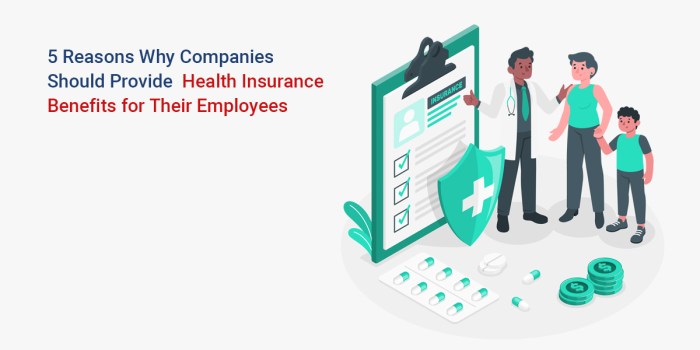
Employee health insurance plans typically provide coverage for a range of medical services and treatments. These plans are designed to help employees manage their healthcare costs and ensure access to necessary medical care when needed.
Coverage Provided by Employee Health Insurance Plans
Employee health insurance plans often cover services such as doctor visits, hospital stays, prescription medications, preventive care, and mental health services. Some plans also offer coverage for dental and vision care. The extent of coverage can vary depending on the specific plan and the insurance provider.
Benefits Included in Health Insurance Packages
In addition to medical coverage, health insurance packages may include benefits such as wellness programs, telemedicine services, and access to networks of healthcare providers. These benefits are aimed at promoting overall health and well-being among employees.
Difference Between Premiums, Deductibles, and Co-pays
Premiums
The amount employees pay for health insurance coverage, typically on a monthly basis.
Deductibles
The amount employees must pay out of pocket for medical expenses before the insurance company starts covering costs.
Co-pays
Fixed amounts that employees pay for specific healthcare services, such as doctor visits or prescription medications, after meeting the deductible.
In-Network Versus Out-of-Network Coverage Benefits
In-network coverage refers to services provided by healthcare providers who have contracted with the insurance company. These services are usually covered at a higher rate. Out-of-network coverage involves services provided by healthcare providers who do not have a contract with the insurance company, resulting in higher out-of-pocket costs for employees.
Types of Health Insurance Plans
Health insurance plans come in different types, each with its own features and limitations. Understanding these options can help employees make informed decisions about their healthcare coverage. Let's explore some common types of health insurance plans available to workers:
Health Maintenance Organization (HMO)
An HMO plan typically requires members to choose a primary care physician (PCP) and get referrals to see specialists. It usually offers lower out-of-pocket costs and focuses on preventive care.
Preferred Provider Organization (PPO)
A PPO plan allows members to see any healthcare provider, but offers more coverage for services provided within the network. It provides flexibility in choosing healthcare providers without needing referrals.
High Deductible Health Plan (HDHP)
An HDHP has a higher deductible than traditional plans, but often comes with lower premiums. It is typically paired with a Health Savings Account (HSA) to help cover out-of-pocket expenses.
Situational Examples:
- For employees who prefer lower out-of-pocket costs and preventive care, an HMO plan may be beneficial.
- Workers who value flexibility in choosing healthcare providers may find a PPO plan more suitable.
- Individuals who are generally healthy and want to save on premiums may opt for an HDHP paired with an HSA.
Enrollment Process and Eligibility
When it comes to enrolling in health insurance plans provided by your employer, there are specific steps and criteria to consider. Understanding the enrollment process and eligibility requirements is crucial for every employee to make informed decisions about their healthcare coverage.
Enrollment Process
- Employees are typically informed about the available health insurance plans during the onboarding process or through communication from the HR department.
- During the annual open enrollment period, employees can choose a health insurance plan that best fits their needs and budget.
- Special enrollment periods may be available for employees who experience qualifying life events, such as marriage, birth of a child, or loss of coverage from another source.
- Employees can enroll in the chosen health insurance plan by completing the necessary forms provided by the HR department.
Eligibility Criteria
- Employees are typically eligible to enroll in the employer-sponsored health insurance plan if they work full-time or meet the specific eligibility requirements set by the employer.
- Part-time employees may also be eligible for health insurance benefits depending on the employer's policies.
- Employers may have a waiting period before new employees are eligible to enroll in the health insurance plan.
Role of HR Departments
- HR departments play a vital role in facilitating the enrollment process by providing information about available health insurance plans, eligibility criteria, and enrollment deadlines.
- HR professionals assist employees in understanding the benefits, coverage options, and costs associated with each health insurance plan.
- They also help employees navigate the enrollment forms, submit required documentation, and address any questions or concerns related to health insurance enrollment.
Cost-Sharing and Employee Contributions
When it comes to employee health insurance plans, cost-sharing plays a crucial role in determining how much both the employer and the employee contribute towards healthcare expenses. Understanding how these costs are divided can help employees make informed decisions about their healthcare coverage.
Premiums
Premiums are the monthly payments that employees and employers make to the insurance company to maintain coverage. Typically, employers cover a portion of the premium cost, while the remaining amount is deducted from the employee's paycheck. It's essential for employees to know how much they need to contribute towards their premiums to budget effectively for healthcare expenses.
Deductibles
Deductibles are the amount employees must pay out of pocket before their insurance coverage kicks in. This is a fixed amount that needs to be met each year before certain services are covered by the insurance plan. Understanding the deductible amount can help employees plan for potential healthcare costs and avoid any surprises when seeking medical treatment.
Co-pays and Coinsurance
Co-pays are flat fees that employees pay for specific services, such as doctor's visits or prescription medications. Coinsurance, on the other hand, is a percentage of the total cost of services that employees are responsible for paying. Knowing the difference between co-pays and coinsurance can help employees anticipate their out-of-pocket expenses and choose healthcare providers that are within their budget.
Tips for Managing Healthcare Costs
Compare healthcare plans
Review different insurance options to find a plan that offers the best coverage at a reasonable cost.
Utilize preventative care
Regular check-ups and screenings can help prevent serious health issues, reducing long-term healthcare costs.
Build an emergency fund
Setting aside money for unexpected medical expenses can provide financial security in case of emergencies.
Understand your benefits
Familiarize yourself with your insurance coverage to make informed decisions about healthcare services and costs.
Wellness Programs and Preventive Care
Employee health insurance often includes wellness programs and preventive care services to promote overall health and well-being. These initiatives are designed to prevent health issues before they escalate, ultimately reducing healthcare costs for both employees and employers.
Role of Wellness Programs in Employee Health Insurance
Wellness programs encompass a variety of activities and resources aimed at improving employees' physical, mental, and emotional health. These programs may include fitness challenges, nutrition counseling, stress management workshops, and mental health support services. By encouraging employees to adopt healthier lifestyles, wellness programs contribute to lower healthcare costs and increased productivity in the workplace.
Preventive Care Services Covered Under Health Insurance Plans
Preventive care services are typically fully covered by health insurance plans, meaning employees can access these services without any out-of-pocket costs. Examples of preventive care services include annual check-ups, vaccinations, cancer screenings, and counseling for tobacco cessation. By making preventive care easily accessible, health insurance plans help employees detect and address health issues early on, improving their overall health outcomes.
Examples of Wellness Initiatives Offered by Companies
Companies may offer a range of wellness initiatives to support employee health and well-being. Some examples include on-site fitness classes, healthy food options in the cafeteria, mental health resources such as counseling services, and incentives for participating in wellness activities.
These initiatives not only benefit employees by improving their health but also contribute to a positive work environment and increased employee satisfaction.
Benefits of Preventive Care for Employees and Employers
Preventive care plays a crucial role in maintaining employee health and reducing healthcare costs. For employees, regular preventive care can help detect health issues early, leading to better treatment outcomes and improved overall well-being. Employers benefit from reduced absenteeism, increased productivity, and lower healthcare costs associated with treating preventable conditions.
By investing in preventive care, both employees and employers can enjoy the long-term benefits of a healthier workforce.
Closing Notes
In conclusion, this discussion on Employee Health Insurance Explained: Benefits Every Worker Should Know underscores the significance of understanding health insurance benefits in the workplace, empowering employees with knowledge that can positively impact their well-being.
Helpful Answers
What is the difference between premiums, deductibles, and co-pays?
Premiums are the amount paid for the insurance policy, deductibles are the out-of-pocket costs before insurance kicks in, and co-pays are fixed amounts paid for services.
How can employees manage healthcare costs effectively?
Employees can manage costs by utilizing in-network providers, understanding their coverage, and taking advantage of wellness programs and preventive care services.
What are the eligibility criteria for employees to qualify for health insurance benefits?
Eligibility criteria typically include working full-time or meeting specific employment tenure requirements set by the employer.






![Trulicity Eye Side Effects Lawsuit [2025 Update] | King Law](https://medic.goodstats.id/wp-content/uploads/2025/12/Trulicity-Side-Effects-Common-Serious-Long-term-1-120x86.png)